
From Chalk Boards to Virtual Worlds

A collaboration between NTT DATA and Way For Life is quietly rewriting what opportunity looks like inside the walls of Bengaluru's government schools
The partnership of NTT Data and Way for Life has achieved multiple remarkable feats, when we imagine government schools we imagine a building with tarnished walls, limited resources and even fewer amenities. Well this partnership has revolutionized the school as we know it, as students at Kodathi Government High School are slipping on VR headsets and stepping inside the human body, walking the surface of Mars, and watching history unfold around them, all without leaving their neighbourhood. This shows the true passion the organizations have shown to achieve this extraordinary accomplishment.
The inequality between private and government school education in India has long been documented. Access to digital infrastructure, experiential tools, and science labs remains a privilege, not a right, for millions of children from lower-income households. The NTT Data-Way For Life partnership set out to chip away at precisely this divide, not with charity, but with carefully designed, sustainable infrastructure that places meaningful learning tools directly in the hands of children who need them most.
A Room That Dissolves Inequality
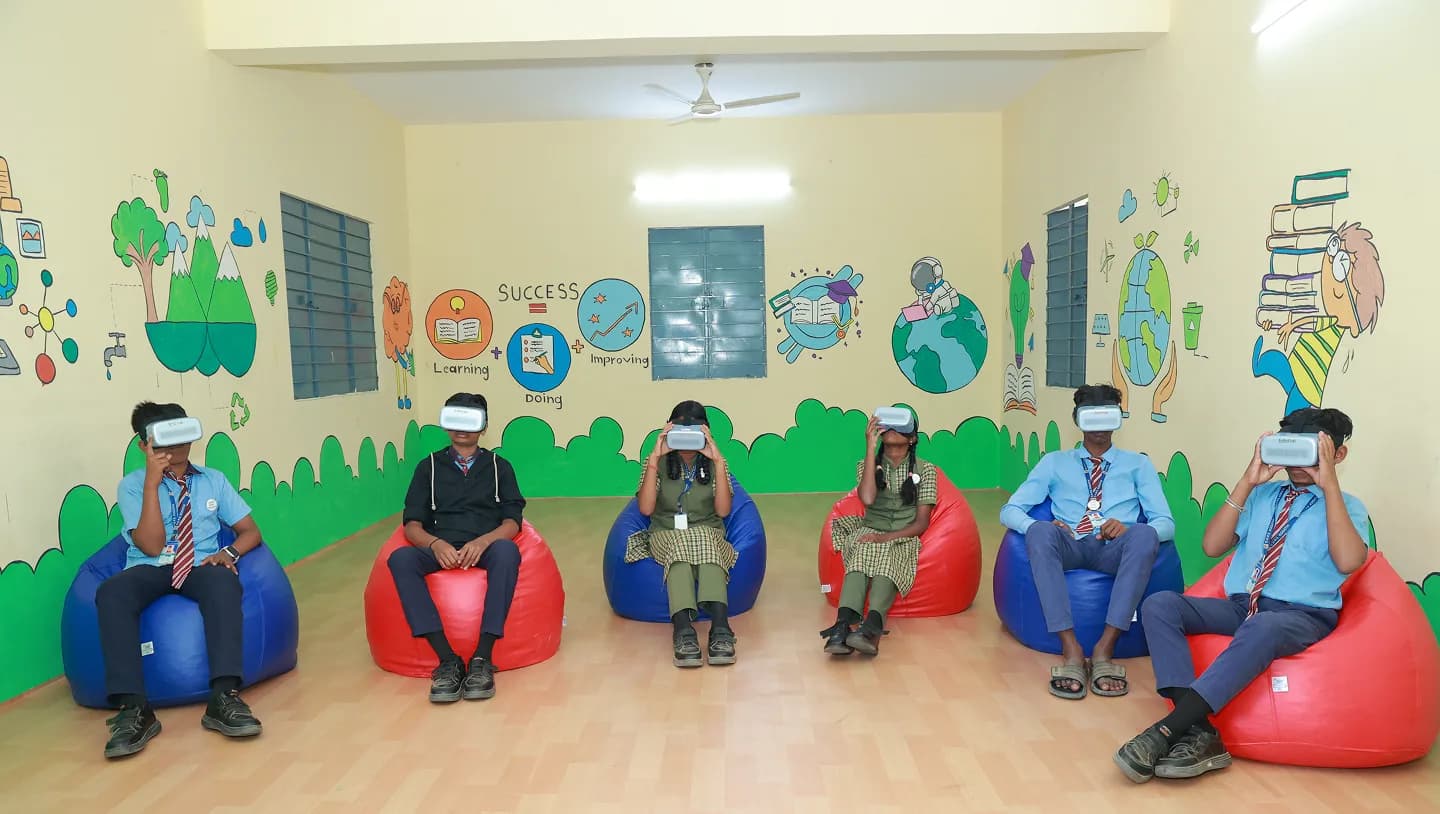
The most significant accomplishment of this project is the establishment of a dedicated Virtual Reality Room at Kodathi Government High School. The room houses 10 standalone VR headsets, a teacher control tablet for session management, secured device storage, and a structured scheduling system, all aligned to the NCERT curriculum for Grades 5 through 10. This particular school was picked among the rest through rigorous needs assessment which was conducted with multiple school authorities, the key factors are limited access to technology and digital infrastructure to promote learning, concentrated population of students from underserved backgrounds, if they showed strong interest from school leadership in adoption innovative teaching methods, and lastly the availability of a dedicated space to house the classroom.
Each of these VR sessions is designed around current curriculum objectives, to make sure that VR strengthens academic understanding and not takes away from it acting as a distractive tool. A student studying the solar system does not merely read about planetary orbits, she orbits them. Similarly, a student learning about the human digestive system does not copy a diagram from a blackboard, he walks through one. The result is measurably improved student engagement, stronger conceptual understanding, and a meaningful leap in digital literacy for children who may never have touched a computer before. Over 370 students and staff members have been directly reached through the programme, generating more than 4,000 immersive learning experiences annually.
For many of these children, the VR room is the first encounter with technology in the digital learning space, thus leading to a formative experience that restructures what they believe is possible for themselves. A child from a low-income household in Kodathi now shares, in this one room, the same quality of learning experience as a student in any well-resourced private school across the city.
Bridging the Invisible Gap
What connects the VR room and the vertical garden is not just a CSR budget, it is a shared philosophy. NTT DATA and Way For Life operate from the belief that children in government schools deserve infrastructure that places the underprivileged students on the same foothold as their wealthier peers. India's education inequality is often spoken about in terms of funding and teacher ratios. Less visible is the experiential gap, the difference between a child who has used a microscope and one who has only read the word, between one who has seen a 3D model of a cell and one who has only copied a 2D drawing. These gaps compound across years, silently shaping what children dare to aspire to.
In conclusion, this project places immersive technology and nature-based learning inside government schools, thus allowing the children to learn and have hands-on experience. Way for Life's strong connection to the underprivileged communities allows it to have trusted relationships with government school administrators which have been core to this project. To add on, NTT DATA's investment was able to lift the project off the ground and give life to their vision. Now in its third year, the partnership has produced outcomes that point toward a scalable model, one that demonstrates, compellingly, that technology and nature are not opposites of equity. When placed in the right hands, they are its most powerful instruments.